


Why Singapore’s Humidity Keeps Feeding Mould in Your Home
Updated: Nov 18, 2025
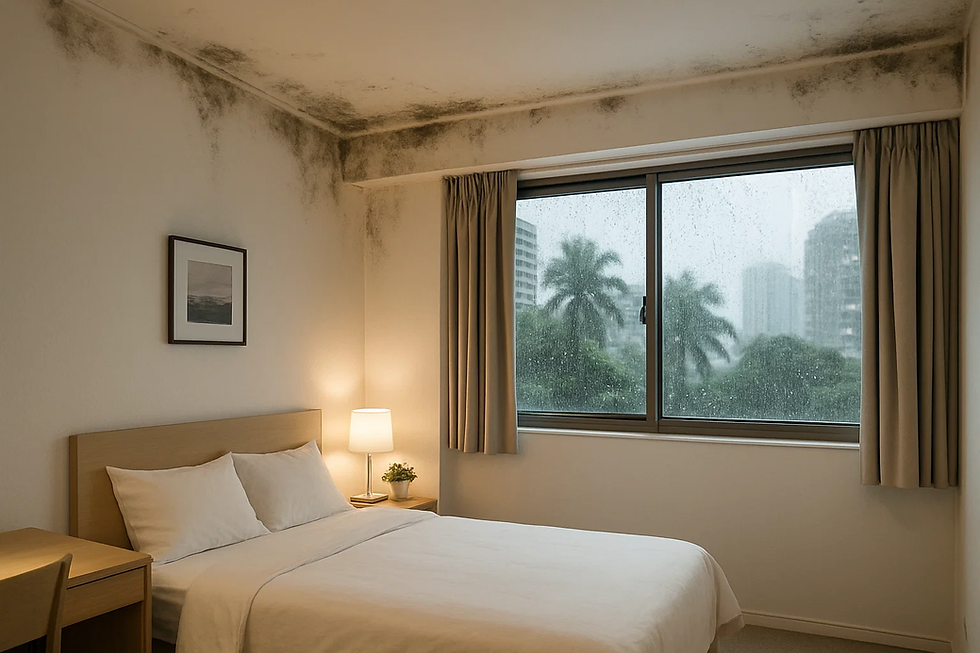
Singapore is no stranger to humid weather. But while we’ve all learned to live with the sticky air and frequent rain, most homeowners don’t realise just how much that humidity is encouraging mould to grow inside their homes. Even well-kept rooms with clean walls and regular aircon use aren’t safe from it.
Here’s how humidity works against you and what you can do to keep your home mould-free.
How Humidity Works in Singapore
Singapore’s average humidity ranges from 70 to 90 percent, and it spikes even higher during rainy months. That means there’s always moisture in the air, even when it doesn’t feel wet to the touch.
In homes where windows stay shut, clothes being dried indoors, or aircon runs frequently, that moisture gets trapped. Over time, it settles onto cool surfaces like ceilings, walls, and furniture. And when moisture lingers, mould gets to work.

How High Humidity Encourages Mould
Mould spores exist everywhere, but they only grow when the environment is right. And humidity is one of the main triggers.
Here’s what we see in homes across Singapore:
• Condensation forming on ceilings and walls
• Damp air getting trapped behind furniture and wardrobes
• Small wet patches appearing on surfaces (water seepage, leakage)
• Mould growing along window frames and curtain rails
Once a surface stays damp for long enough, spores begin to grow. Within a few days, you may notice black or green patches forming.
Real-World Observations From Our Jobs
At Sterng, we’ve handled countless cases where mould returned again and again simply because of unaddressed humidity.
Some common patterns we see include:
• Bedrooms with ceiling mould forming near the aircon
• Built-in wardrobes with visible mould around the back and internal panels
• Living rooms with patchy mould on the ceiling despite weekly wiping
• Toilets and storerooms with no ventilation that smell musty year-round
Even homes that look clean can still have hidden mould if the humidity is never managed.
Why Dehumidifiers and Airflow Matter
Humidity cannot be cleaned away. It needs to be reduced. That’s where dehumidifiers and good airflow come in.
• A good dehumidifier can pull litres of moisture from the air each day
• Fans help move air around and prevent moisture from settling
• Keeping furniture a few inches away from walls lets air circulate
• Opening windows during dry weather can help ventilate the space
Without these simple changes, even the best cleaning efforts may not be enough.

Cleaning Alone Isn’t Enough
Surface mould may look harmless, but if humidity remains high, it will return. We’ve seen many homeowners clean with vinegar or bleach only to have mould show up again the following week.
At Sterng, we use a high-alkaline solution to treat surfaces, followed by fogging to kill off airborne spores. This removes both the visible mould and the hidden triggers that cause it to regrow.
What You Can Do Today
Here’s what we recommend to every homeowner in Singapore dealing with mould:
• Check ceilings, corners, and wardrobes weekly
• Run a dehumidifier especially during wet months or after indoor drying
• Keep windows open when possible to let fresh air in
• Avoid storing clothes too tightly in sealed spaces
• Contact a professional team if mould keeps returning despite cleaning
Final Thoughts
Singapore’s humidity is not going away. But you can stop it from fuelling mould in your home. Once you understand how moisture builds up indoors and what steps to take, controlling mould becomes much more manageable.
If you’re dealing with persistent mould, Sterng offers free inspections across Singapore. Tap here to WhatsApp us and we’ll help you get it sorted for good.
Comments