


How Mould Affects Children’s Health in Singapore Homes

If your child is waking up with a blocked nose, sneezing more than usual, or complaining of itchy skin, the cause might be hidden. Not in the food, not outside, but inside your own home.
In Singapore’s humid environment, indoor mould is a common but often overlooked trigger for health issues. And children are the most vulnerable to it.
Let’s look at how mould affects kids, what warning signs to watch for, and what you can do to protect your family.
Why Children Are More Sensitive to Mould Exposure
A child’s body is still developing. Their immune systems, lungs, and skin are more reactive to irritants than an adult’s. That makes them more likely to show symptoms when exposed to mould spores in the air or on surfaces.
Mould releases tiny particles that float through the room. You can’t see them, but when inhaled or touched, they can trigger reactions. This is especially true during sleep when a child is breathing deeply in a closed room.
Health Effects of Mould on Children
The symptoms can vary depending on the child and the severity of the mould exposure. Some of the more common effects include:
• Persistent coughing, especially at night
• Blocked or runny nose that won’t go away
• Skin rashes or dry, itchy patches
• Worsening of asthma or wheezing
• Red, watery eyes
• Fatigue or disrupted sleep
In more serious cases or with long-term exposure, mould can affect concentration, respiratory development, and even lead to chronic sinus or lung problems.

Where Mould Typically Hides in Children’s Rooms
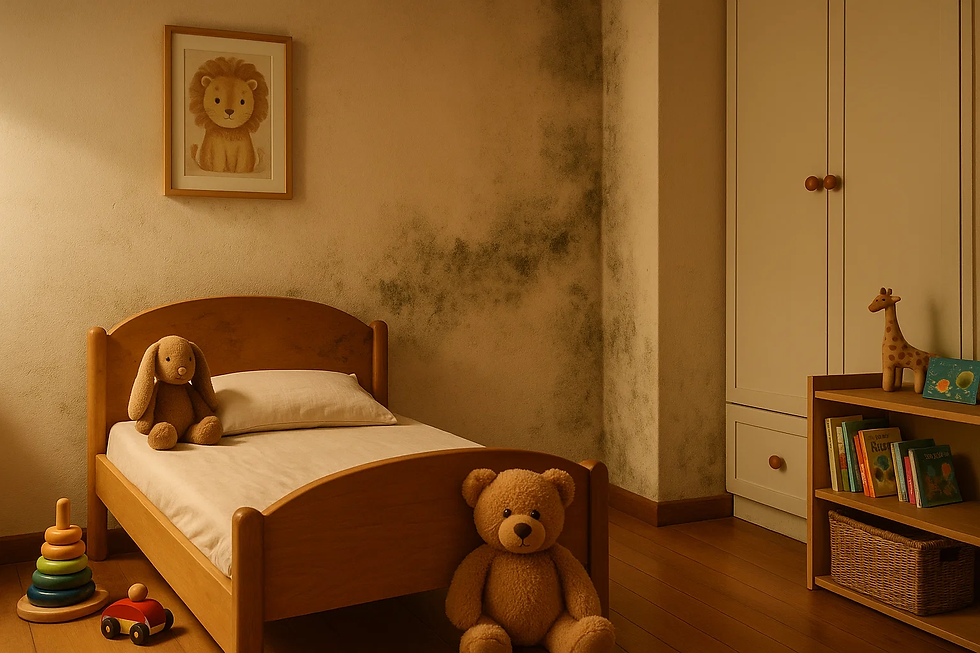
It’s not always on the walls. In fact, most of the bedroom mould cases we’ve treated start in the quiet corners where parents rarely look.
• Behind beds pushed up against the wall
• Inside built-in wardrobes holding clothes or toys
• Around window sills where condensation forms
• On ceilings near the aircon
• Behind long curtains or blackout blinds
• Inside toy boxes or fabric storage bins
Because children often play or sleep close to the floor, they are exposed to these spores more directly.
What We Often See During Inspections
During inspections, we often find that mould in children’s rooms has been forming quietly for months before it becomes visible. It usually starts in warm, enclosed areas with little airflow. The affected child may have been showing symptoms for a while, but the connection to mould only becomes clear when we investigate.
In many of these cases, parents assumed it was an allergy or a seasonal issue.
What You Can Do as a Parent
You don’t need to wait until mould becomes visible to take action. Here are steps you can take now:
• Check corners, behind furniture, and window areas for early signs
• Use a fan or dehumidifier daily, especially after rainy days
• Avoid drying laundry inside your child’s room
• Keep beds slightly away from walls to allow air to move
• Open windows regularly to flush out stale, humid air
• If there’s a musty smell that won’t go away, don’t ignore it
And if you suspect something is wrong but aren’t sure where the mould is hiding, bring in professionals for a full check.
Final Thoughts
Mould might seem like just a stain on the wall. But in homes across Singapore, it’s affecting children’s health more than most people realise. It’s not about being a clean or messy household. It’s about airflow, humidity, and how easily mould can form in our climate.
If you’re concerned about your child’s room, Sterng offers free inspections across Singapore. Tap here to WhatsApp us and we’ll help make your home safer and healthier for your family.
Comments